The Alaska Aquatic Invasive Species Clearinghouse (AK Aqua) is a database and mapping application that provides temporal and geospatial information for invasive freshwater aquatic species in Alaska. AK Aqua also provides a list of aquatic invasive species along with management and planning documents that support on‑the‑ground decision‑making. These data are primarily intended to support the identification of problem species and affected geographic regions, thus promoting early detection and rapid response across Alaska.
The AK Aqua products are the result of an ongoing cooperation among the U.S. Fish and Wildlife Service, the Alaska Department of Natural Resources, Alaska Department of Fish and Game, KBNERR and ACCS, in support of the Alaska Invasive Species Partnership (AKISP) and the Alaska Aquatic Nuisance Species Management Plan. ACCS administers the mapping application, database, and website associated with the project, while project funding is granted by collaborators.
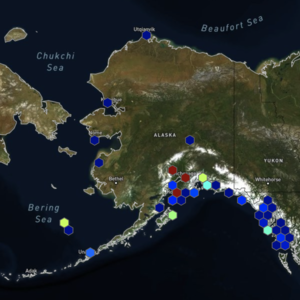 Alaska Aquatic Invasive Species Clearinghouse.
Curated, long-term dataset.
Alaska Aquatic Invasive Species Clearinghouse.
Curated, long-term dataset.
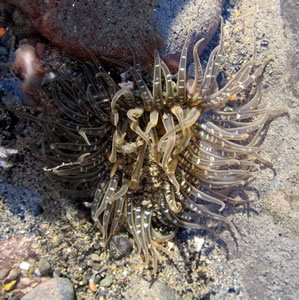 Aquatic Invasive Species List.
Comprehensive list of non-native marine and freshwater aquatic invasive species.
Aquatic Invasive Species List.
Comprehensive list of non-native marine and freshwater aquatic invasive species.
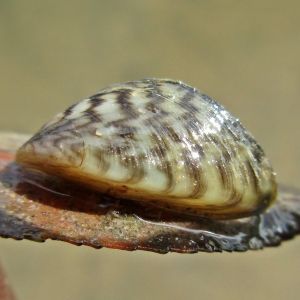 Dreissenid Mussel Web App.
Early detection monitoring prioritization tool.
Dreissenid Mussel Web App.
Early detection monitoring prioritization tool.
Submitting Data
AK Aqua data are submitted by statewide partners and must adhere to stringent nationalized invasive species data standards. Data submissions are reviewed by KBNERR and ACCS data managers before being published. eDNA sampling results are not visible to the public until recommended field sampling verification has confirmed a detection.
For questions or comments, including procedures for managing or submitting data, please contact Kim Schuster.
Recommended Citation
AK Aqua. (Year). Alaska Aquatic Invasive Species Clearinghouse. Kachemak Bay Research Reserve, Alaska Center for Conservation Science, University of Alaska Anchorage. Accessed (Month, Date, Year). Available online: https://accs.uaa.alaska.edu/invasive-species/aquatic-invasive-species/
Other Resources
Alaska Invasive Species Partnership (AKISP)
Aims to heighten the awareness of the problems associated with non-native invasive plants and to bring about greater statewide coordination, cooperation and action to halt the introduction and spread of undesirable plants.
Alaska Department of Fish and Game
Information on aquatic invasive species in Alaska.
U.S. Fish and Wildlife Service
The U.S. Fish and Wildlife Service’s Branch of Aquatic Invasive Species funds and coordinates aquatic invasive species activities across the country.
National Invasive Species Information Center (NISC)
The gateway to invasive species information covering federal, state, local, and international sources.
Integrated Taxonomic Information System (ITIS)
Taxonomic information on plants, animals, fungi, and microbes of North America and the world.
Pacific States Marine Fisheries Commission Invasive European Green Crab
Monitoring database for invasive European green crab populations on the West Coast, USA and Canada.
United States Geological Survey Nonindigenous Aquatic Species
Resources and central repository for spatially referenced accounts of introduced aquatic species through community monitoring and the general public.
Alaska Department of Fish & Game Interactive Map of Invasive Northern Pike in Southcentral Alaska
This data is incorporated into AK Aqua.
Western Regional Panel on Aquatic Nuisance Species
19 western states and 4 provinces are working together to address invasive species issues.
National Estuarine and Marine Exotic Species Information System (NEMESIS)
Information on marine and estuarine invertebrates and algae introduced to the United States provided by the Smithsonian Ecological Research Center.
Invasive.org
Information and images of invasive and exotic species of North America from the University of Georgia’s Center for Invasive Species and Ecosystem Health.
Species Information and Field Guides
Collection of materials including phytoplankton and invertebrate guides, marine toxin information, aquatic fact sheets, and management best practices.
Alaska Exotic Plants Information Clearinghouse (AKEPIC)
A database and mapping application that provide geospatial information for non-native plant species in Alaska and neighboring Canadian Territories.
Plate Watch: Invasive Tunicate Network
Community monitoring program for invasive marine tunicates and long-term database run by the Smithsonian Environmental Research Center.
Dreissenid Western Aquatic Invasive Species Monitoring (quagga/zebra mussels)
Information and maps that are intended to provide an up to date synopsis of who is monitoring for what species, where, how and when across the regional western states.